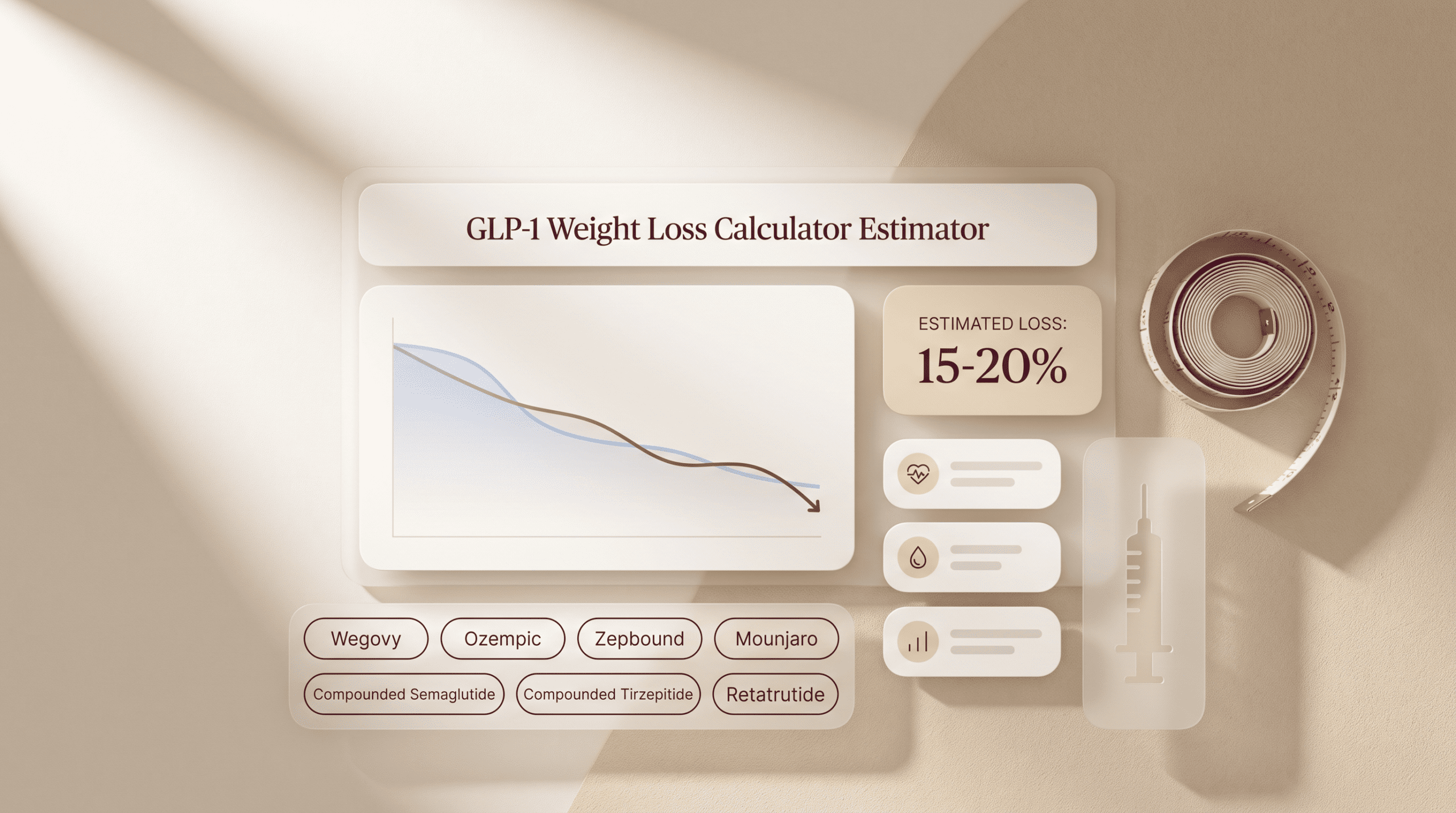

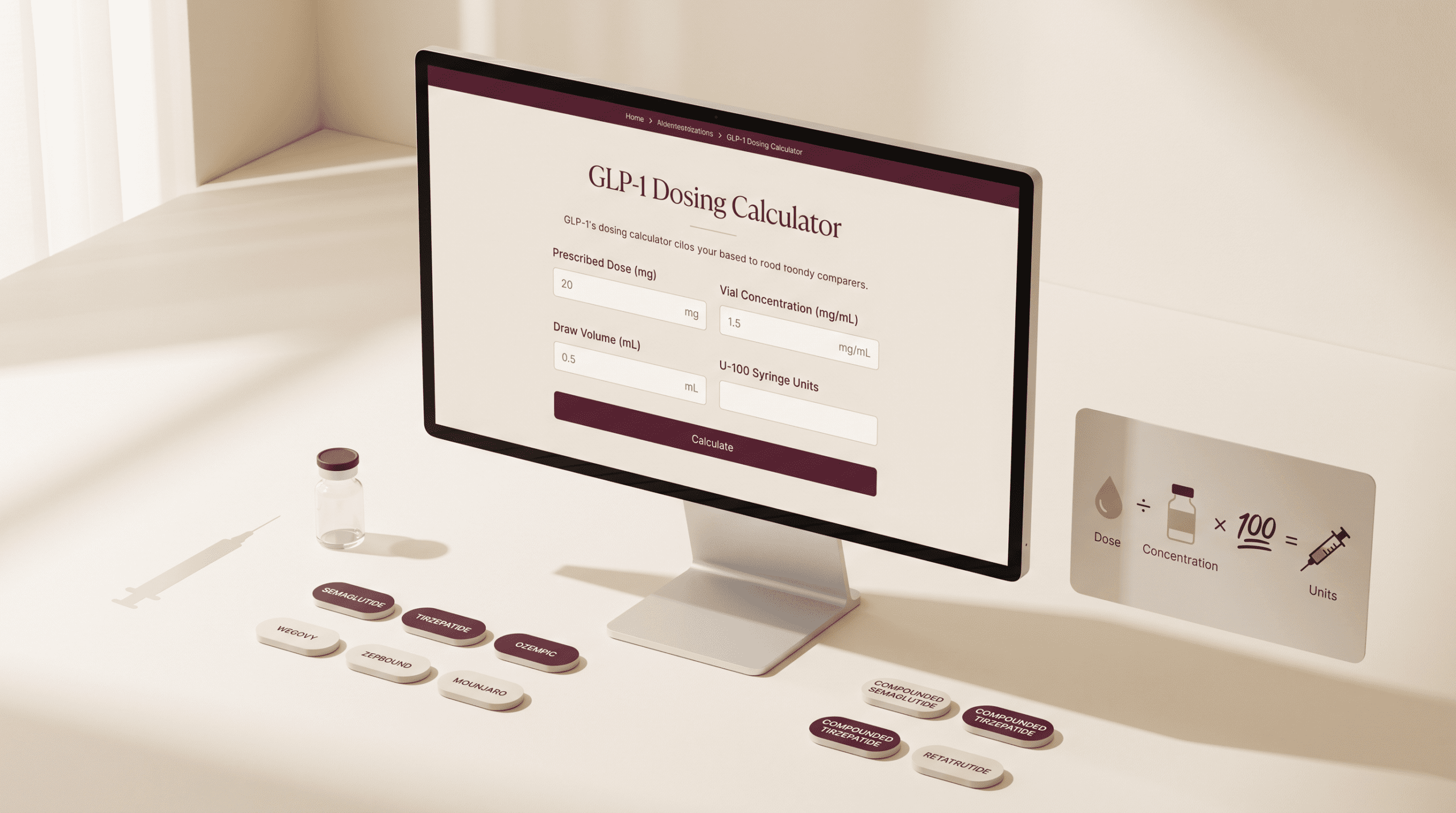
The GLP-1 Dosing Calculator helps users convert a prescribed dose in mg into mL and insulin-syringe units based on the exact concentration printed on their vial. This matters most for compounded semaglutide and compounded tirzepatide, because the same dose can equal very different unit amounts depending on concentration.
Bariatric Journal calculator
GLP-1 dosage calculator
Dose results
Use the selected medication, vial strength, and total volume to estimate concentration, draw volume, and insulin-syringe units.
*Educational use only. Always confirm with your medical professional before proceeding any dose or medication.
How it works
-
Select the medication and prescribed weekly dose.
-
Enter the vial concentration in mg/mL, or total mg and total mL if that is how the vial is labeled.
-
Review the calculated concentration, draw volume in mL, and U-100 syringe units.
Safety copy
This calculator should state clearly that it is not for changing a prescribed treatment plan. Current dosage-calculator pages repeatedly warn that branded prefilled pens have fixed doses and generally do not require conversion, while compounded products require careful label verification because pharmacy concentrations can differ.
Suggested FAQ
-
Why do units change even when the dose stays the same? Because units depend on concentration, and a lower-concentration vial needs a larger draw volume for the same mg dose.
-
Is this for pens or compounded vials? It is most useful for compounded vials; branded pens usually deliver a fixed preset dose.
-
What schedule should I show on the page? A common semaglutide titration example is 0.25 mg, 0.5 mg, 1 mg, 1.7 mg, then 2.4 mg, while tirzepatide commonly steps 2.5 mg, 5 mg, 7.5 mg, 10 mg, 12.5 mg, then 15 mg.


GLP-1 Delivered
- Lose pounds of fat every week
- Weight Loss Money Back Guarantee
- No membership or hidden fees! Everything you need is included
- Start for just $179, no insurance required + free shipping


TRIMRX - GLP-1 DELIVERED
- 100% online medical review with licensed U.S. providers
- No insurance required
- Transparent pricing
- No hidden fee